

Redbud and Lamb
Kolbe Report 4/11/26

Dear Friends of the Kolbe Center,
Christ is risen! Alleluia!
It is spring in the Shenandoah Valley, and my wife and I are approaching our 52nd wedding anniversary, surrounded by the inebriating beauty of all kinds of flowering trees and bushes. A few years ago, I was inspired to write a poem for my wife on our anniversary, inspired by the flowering redbud, my favorite tree.
The Logos of the Red-Bud Flowers
(for my wife on our anniversary)
New leaves explode
And red-buds fall
The green phalanges
Shake their spears.
The purple flags
No more unfurl,
When the bright
Wind fleers.
But far from these
Vermillion showers
(yet nearer than
The wind that fleers)
The logos-of-the-
Red-bud flowers
In Paradise—
For changeless years.
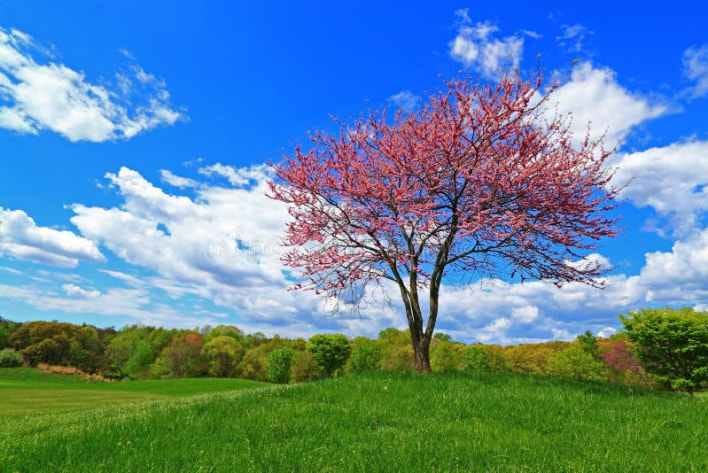
It is a wonderful thing to contemplate the beauty of a redbud tree and to know that it instantiates an idea in the mind of God that expresses His love for us. The more that biologists learn about the natures of living things, the more apparent it becomes that each kind of plant or animal has a distinct form which governs the way that the material elements of the organism are arranged. St. Thomas Aquinas anticipated these discoveries, and, while he rejected Plato’s idea of forms that could exist independently, he firmly believed that the forms, or ideas, that correspond to the different kinds of plants and animals, exist in the mind of God. In the Summa Contra Gentiles he writes:
Augustine says that God made man and a horse by distinct exemplars. He also says that the exemplars of things are a plurality in the divine mind. This conclusion likewise saves to some extent the opinion of Plato and his doctrine of Ideas, according to which would be formed everything that is found among material things.
In the Summa Theologica St. Thomas added:
It is necessary to suppose ideas in the divine mind. For the Greek word idea is in Latin Forma. Hence by ideas are understood the forms of things, existing apart from the things themselves . . . there must exist in the divine mind a form to the likeness of which the world was made. And in this the notion of an idea consists.
The Angelic Doctor also anticipated an objection to this concept from Aristotle:
[Aristotle criticized] Plato’s theory of ideas because the latter asserted that the forms of material things existed without matter. Now, these forms would exist without matter to a much greater extent were they in the divine intellect instead of being outside of it, because the divine intellect is the acme of immateriality. Therefore, it is much more inconsistent to say that ideas exist in the divine intellect.
St. Thomas answered this objection, saying:
It is contrary to the nature of natural forms that they should be immaterial in themselves; but it is not inconsistent for them to acquire immateriality from the One in whom they exist. Consequently, in our intellects, the forms of natural things are immaterial. Hence, while it would be incorrect to assert that ideas of natural things have a separate subsistence, it would be correct to say that they are in the divine mind.
From Form to Formlessness
Natural science and medicine have been grievously harmed by abandoning the philosophy of St. Thomas and Aristotle for Cartesian-Darwinian materialism. American agriculture has been largely destroyed by the belief that the natures of food crops can be altered for the attainment of specific short-term objectives without regard for the short and long-term consequences of those alterations on the whole organism and on the environment. The physical, emotional, and spiritual wellbeing of women has been devastated by the promotion of contraceptives which for the sake of an unnatural short-term objective—the suppression of a woman’s fertility—wreak havoc on the overall health of her body, mind, and soul. Similar examples could be cited, almost ad infinitum.
For three decades, our family has experimented with organic gardening and animal husbandry, and we have learned, often by trial and error, a host of painful lessons. Over the last three decades we have had adventures of various kinds with sheep and with goats, which have helped us to appreciate Our Lord’s words about the separation of the one from the other at the Final Judgment. It is apparent to us that for all their differences, sheep and goats are of the same taxonomical family and of the same Biblical “kind.” Indeed, according to animalwised.com:
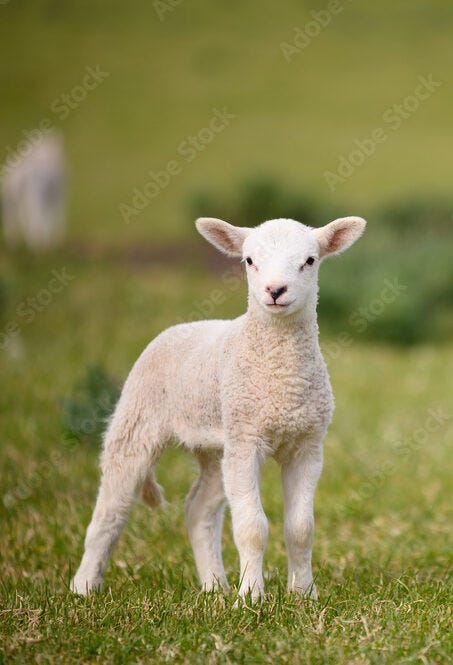
Goats and sheep don’t belong to the same species. However, they are closely related. Both of them belong to the cattle family, Bovidae, and the goat-antelope subfamily, Caprinae. All its members are described as “caprine”, and they are all ruminant herbivorous mammals.
Recently, scientists at the University of Edinburgh cracked the genetic code of sheep to reveal how they became a distinct species from goats thousands of years ago.
Having grown up in a city for the most part, I tended to understand Our Lord’s words about the separation of sheep and goats in a Calvinist way. According to that interpretation, sheep and goats were different from the beginning and seemed predestined to the judgment they received on the Last Day. Having gotten to know them intimately over the decades, however, it is easy to see that Our Lord meant us to understand that the sheep and the goats in His parable belong to the same family, and that the human beings they represent, who also belong to one family, freely choose whether or not to follow the voice of the Good Shepherd in their consciences and in the authoritative teachings of His Church.
Rose of Lamba
About two years ago, a gate to one of our paddocks was left open, and all of our sheep ran off. With the help of our grandsons, all but two of the sheep were returned to the pasture, but two of them refused to go back in. One of the two was a pregnant ewe who gave birth to a lamb at the paddock gate and ran away. We had no choice but to bring her lamb into our house and bottle feed her several times a day, often leaving her free to wander about the ground floor of our timber-frame home between feedings. Rose of Lamba, as we called her, soon became convinced that she was a human being, and insisted on being treated as a member of the family. Since I fed her several times a day, Rose would follow me wherever I went, inside or out.
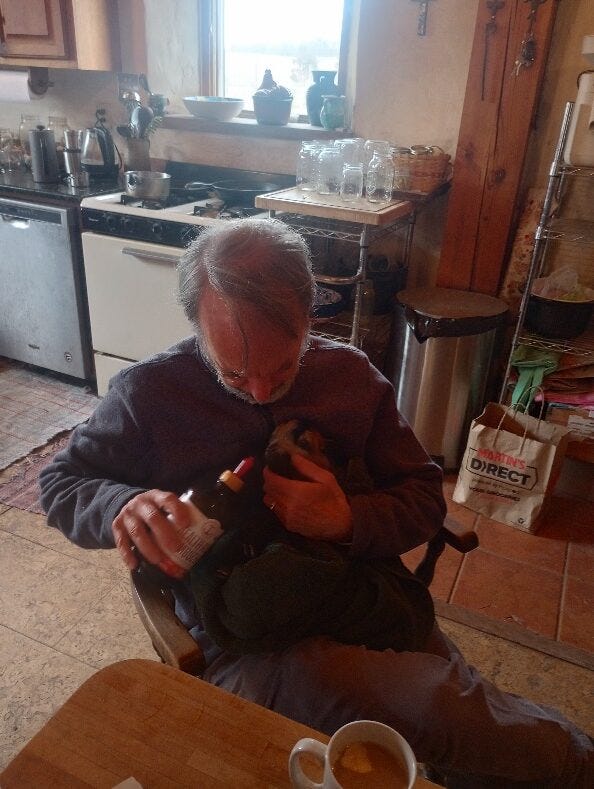
When Rose was old enough to begin eating grass, we made a little fenced-in area for her near one of the sheep paddocks, but close to our house. We had hoped that the other sheep would take an interest in her, but they remained stand-offish, and preferred to stay in one of the other paddocks, far away. As a result, Rose became much more interested in the Vietnamese pigs that we kept in a fenced-in area near Rose’s enclosure, in back of our house. When Rose got big enough to be completely weaned from the bottle, we put her in the paddock closest to our home, thinking that she would naturally want to be with the other sheep. But, to our dismay, we realized that Rose had gone from thinking that she was a human to believing that she was a pig! She wanted nothing to do with the other sheep, and she ran back to be with the Vietnamese pigs whenever we carried her off to be with her own kind. Finally, we had no choice but to enclose her with the other sheep in one of the paddocks farthest from the pigs. But, for a long time, Rose kept bleating and looking wistfully back at the pig-pen.
After several weeks, our ram began to take an interest in Rose, and she began to act more contented, but she still rarely associated with the rest of the sheep. After she became pregnant, she remained aloof from the rest of the flock most of the time, but she successfully gave birth to two lambs and seemed to care for them. As her lambs grew up, Rose would often graze with them apart from the rest of the flock, but they seemed to thrive. Rose’s favorite companion was our beef cow, so she and her lambs would often graze near the hay bale that we rolled into the paddock closest to the cow-shed where the cow and the sheep would go in the worst winter weather.
A few months ago, we had some of the coldest weather we have ever experienced in thirty years in Shenandoah County, along with freezing rain. The sheep huddled together in the shed, but Rose stayed near the cow and the hay bale, and we found one of her lambs frozen to death after trying to stay near her mother in the freezing rain. The extremely cold weather continued, and the snow-covered fields turned into sheets of ice. When I went out to check on the sheep, a day or two later, I found most of the sheep huddled together in the shed, but Rose and her lamb were nowhere to be seen. After slipping and sliding across the ice-covered fields, I found Rose frozen to death in the paddock closest to the Vietnamese pigs, and her lamb frozen to death at the bottom of the same field.
We have learned our lesson. If we ever have to raise a lamb again, we will put her back with her own kind as soon as we can, and we will never expose her twice to proximity to creatures of a different kind.
Rose’s life was like a parable for moderns who think that they can defy the limits of created nature.
Trans-specieism proved just as deadly as transgenderism.
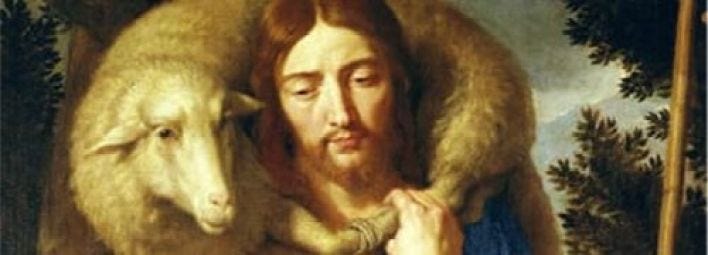
Through the prayers of the Holy Theotokos, of St. Joseph, Terror of Demons, and of all the Holy Angels and Saints, may the Holy Ghost keep us faithful to the Good Shepherd, this Easter and always!
In Domino,
Hugh Owen
P.S. The wonderful young Catholics who host a Kolbe internet outreach on Discord will be hosting an informal discussion of topics related to the traditional doctrine of creation at 2 p.m. Eastern this afternoon. Anyone can join the discussion at this link.
P.P.S. The Kolbe Center’s 2026 leadership retreat will take place from July 3-9 at the Catholic Conference Center in Hickory, North Carolina. For information and to register, please contact Hugh Owen at howen@shentel.net. If anyone in your family would like to participate in this year’s play about Blessed Nicholas Steno, please be sure to include that information. The video recordings of the presentations from our 2025 leadership retreat are now available on the Kolbe Center’s Youtube channel.
I give thanks to God for the Kolbe Center (and similar websites true to the Church Magisterium) because it has greatly influenced and strengthened my Faith.
For the past several years I’ve been homeschooling myself to obtain what was missing because of attending public schools (elementary to college). For example, I’ve delightfully discovered St. Thomas Aquinas!
I’ve come to an understanding of how important and necessary it is for children to be homeschooled and have stay-at-home mothers.
I recently joined our FSSP parish Confraternity of Christian Mothers (as a spiritual mother because I was unable to have children) so I can offer prayers and spiritual support for my sister mothers, their children and families. We use the “Mother Love” book which is a rich source of spiritual guidance, readings, and prayers for mothers. It even has content for mothers dealing with children (and mothers themselves) regarding technology used in the home. If there are any women out there reading my post I highly recommend looking into joining your local Confraternity of Christian Mothers. If there’s not one close to you, the Archconfraternity of Christian Mothers website can help you. JMJ, your sister in Christ
I wonder why Rose of Limba reminds me of Rose in Charles Dickens' "Oliver Twist." But there. Happy 52 years of family life!